
UK Subsidiary Accounting, Tax & Compliance Guide (2026)

UK Subsidiary Accounting, Tax & Compliance: A Guide for Overseas Parent Companies (2026)
A UK subsidiary may be wholly owned by an overseas company, but it has its own accounting, tax and statutory responsibilities. Those obligations do not disappear because the parent already has a finance department, prepares consolidated accounts or manages the subsidiary’s transactions from abroad.
For an American, German, French, Dutch, Indian or other international parent company, the challenge is often coordinating two reporting systems: the UK subsidiary’s statutory obligations and the overseas group’s financial requirements.
Who maintains the UK company’s books? How should management fees, intercompany loans and shared expenses be recorded? Does the subsidiary need a UK accountant? How do Corporation Tax, VAT, payroll and Companies House deadlines fit into the group’s existing processes?
This guide explains the principal responsibilities, where international groups need particular care, and how to organise UK subsidiary accounting and compliance from the beginning.
If your overseas company has not yet established its UK entity, start with our step-by-step guide to setting up a UK subsidiary, which explains the ownership structure, required documents, registration process and initial compliance considerations.
Quick Answer: What Accounting and Tax Obligations Does a UK Subsidiary Have?
A UK-incorporated subsidiary is generally a separate legal entity from its overseas parent. It must maintain adequate accounting records and comply with the UK reporting obligations applicable to its circumstances.
These normally include annual statutory accounts, Corporation Tax compliance, Companies House filings and proper records of transactions with its parent.
VAT, payroll, statutory audit and specialist international tax obligations depend on the company’s activities, size and group arrangements.
The overseas parent can manage bookkeeping or group reporting centrally. However, the UK subsidiary’s directors remain responsible for ensuring that the company meets its legal obligations, even when work is delegated to an overseas finance team or external accountant.
The Two Reporting Responsibilities
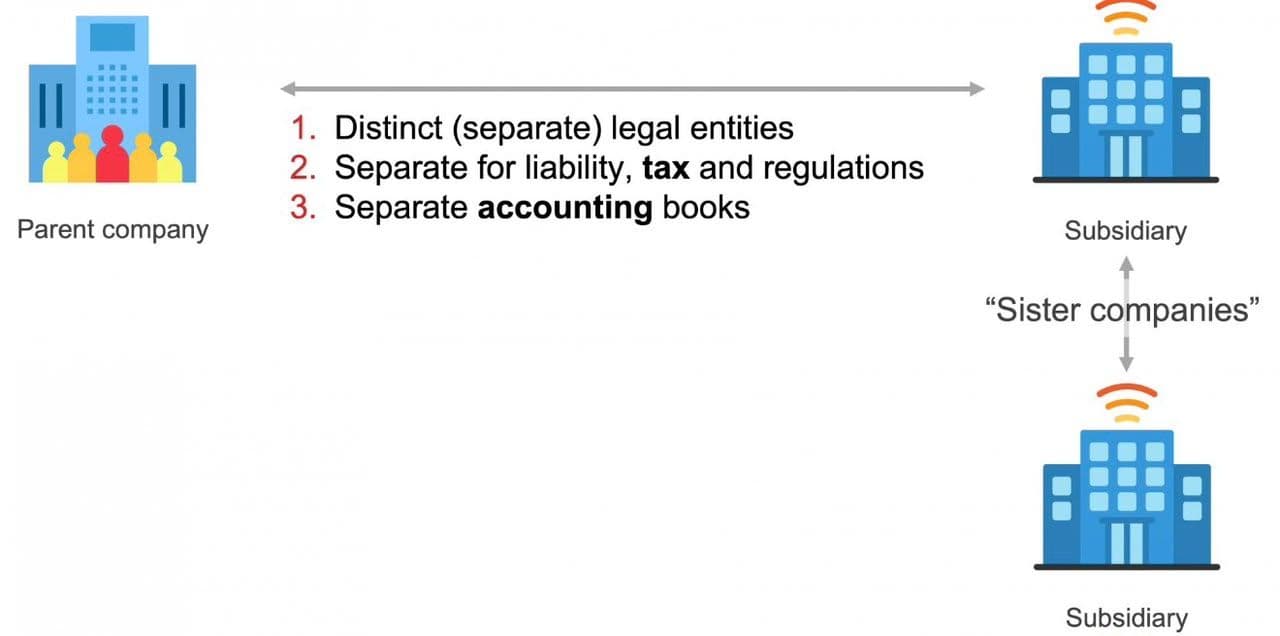
Overseas parent company
Group finance policies, consolidation, management reporting and parent-jurisdiction obligations.
↓
UK subsidiary
Identifiable accounting records, UK statutory accounts, Corporation Tax and applicable VAT, payroll and Companies House obligations.
The essential distinction: Group consolidation does not normally replace the UK subsidiary’s own statutory reporting.
If your company is still considering its UK structure, read our UK Subsidiary vs Branch guide.
1. Does a UK Subsidiary Need Separate Accounting Records?
Yes. A UK subsidiary must maintain adequate accounting records identifying its own transactions, assets, liabilities and financial position.
For example, a US technology company may own a UK subsidiary that employs British staff and invoices UK customers. The parent may prepare consolidated financial statements under US GAAP, but the UK company must still maintain records suitable for its statutory accounts and tax reporting.
Separate accounting records do not necessarily require separate accounting software or an independent finance department.
A parent can use a central finance system, provided the UK subsidiary’s records remain identifiable, complete, accessible and capable of supporting its UK obligations.
What Records Should the UK Company Maintain?
Depending on its activities, the records may include:
- Sales invoices and customer receipts.
- Supplier bills and payment records.
- Bank and payment-account statements.
- Payroll and employment records.
- Inventory and fixed-asset registers.
- Intercompany balances and supporting agreements.
- VAT records and tax calculations.
- Other documents supporting the company’s transactions.
Under UK company law, private companies generally retain accounting records for at least three years. Corporation Tax rules commonly require records to be retained for six years from the end of the relevant accounting period, with longer retention in certain circumstances.
The sensible approach is to maintain a documented retention policy satisfying all applicable requirements, rather than relying on the shortest period.
Official reference: HMRC — Corporation Tax record retention.
Can the Overseas Finance Team Handle Bookkeeping?
Yes.
The overseas finance team can undertake day-to-day bookkeeping. The group should establish who records transactions, reconciles balances, reviews UK tax classifications and authorises statutory submissions.
The location of the finance team does not remove the subsidiary’s UK obligations.
2. UK Statutory Accounts and Companies House Deadlines
A UK subsidiary normally prepares annual statutory accounts and files the required accounts with Companies House.
The form of those accounts depends on the applicable accounting framework, company size, reporting exemptions and group circumstances.
Standard Companies House Filing Deadlines
First accounts
For a newly incorporated private limited company, first accounts are commonly due 21 months after incorporation.
More precisely, where the first accounts cover more than 12 months, the deadline is the later of:
- 21 months after incorporation; or
- Three months after the accounting reference date.
Where the first accounts cover 12 months or less, the normal filing rules apply.
Subsequent annual accounts
For a private limited company, subsequent annual accounts are generally due nine months after the financial year-end.
Changes to the accounting reference date, extensions and other circumstances may affect the actual deadline.
These are Companies House deadlines. They are separate from Corporation Tax payment and Company Tax Return deadlines.
Official reference: Companies House — Preparing and filing accounts.
Should the UK Subsidiary Use the Same Financial Year-End as Its Parent?
Not necessarily.
Aligning financial year-ends can simplify consolidation, intercompany reconciliation and group reporting.
For example, a German parent with a 31 December year-end may prefer its UK subsidiary to report on the same date.
However, the subsidiary’s Companies House accounting reference date must be considered before changing its reporting period.
Does Every UK Subsidiary Need an Audit?
No. But audit exemption must be assessed carefully.
The company’s size, group relationships, activities and applicable exclusions can affect whether an audit is required.
A subsidiary should not assume that low standalone turnover automatically creates an audit exemption.
Certain subsidiary exemptions have additional statutory conditions, and a parent established outside the UK cannot simply assume that every UK-parent guarantee-based exemption is available.
Official reference: GOV.UK — Audit exemptions for private limited companies.
3. Corporation Tax for Foreign-Owned UK Subsidiaries
A UK-incorporated subsidiary is generally UK tax resident under domestic law, subject to applicable exceptions and treaty considerations.
Its Corporation Tax position must be assessed on taxable profits under UK rules.
Ownership by an overseas parent does not, by itself, exempt the subsidiary from UK Corporation Tax.
Corporation Tax Rates for 2026
For the financial year beginning 1 April 2026, the standard non-ring-fence Corporation Tax rates are:
19% — Small-profits rate
Generally applies to eligible companies with profits up to the relevant lower limit.
25% — Main rate
Generally applies where profits exceed the relevant upper limit and to certain companies excluded from the small-profits regime.
Marginal Relief
May apply to eligible companies whose profits fall between the relevant limits.
The standard lower and upper limits are £50,000 and £250,000. These are profit thresholds, not turnover thresholds.
The limits can be reduced where a company has associated companies or a short accounting period.
Not every company is eligible for the small-profits rate or Marginal Relief. Close investment-holding companies, for example, are generally excluded.
Official references:
Why Associated Companies Matter
International groups should examine the associated-company rules before assuming their UK subsidiary qualifies for the full standard thresholds.
For example, where a UK company has three other associated companies counted under the relevant rules, the standard thresholds would generally be divided by four.
For a full 12-month accounting period, that gives illustrative limits of:
£12,500 — Lower limit
£62,500 — Upper limit
The actual calculation depends on which companies are associated, relevant exclusions and the accounting period.
Overseas companies can be relevant to the assessment.
A newly incorporated UK subsidiary is not automatically entitled to the full thresholds merely because its UK revenue is modest.
Corporation Tax Payment and Filing Deadlines
For companies within the normal payment regime:
Corporation Tax payment
Generally due nine months and one day after the relevant Corporation Tax accounting period ends.
Company Tax Return
Generally due within 12 months after the accounting period ends.
Larger companies can be subject to different payment arrangements, including instalments.
A company may also be required to file a return when HMRC issues a notice, even where it has made a loss or owes no Corporation Tax.
The tax payment deadline, Company Tax Return deadline and Companies House accounts deadline must therefore be tracked separately.
For a broader explanation of recurring UK filing dates, see our UK Company Compliance Calendar.
Official reference: GOV.UK — Accounts and tax returns for private limited companies.
4. Intercompany Transactions: Where Overseas Groups Need Particular Care
A subsidiary and its overseas parent are separate legal entities.
Transactions between them require appropriate identification, accounting and, where relevant, tax analysis.
Management and Support Fees
The overseas parent may charge the UK subsidiary for finance, administration, technology, marketing or central management services.
The UK company should be able to identify the services received and the basis of the charge.
Intercompany Loans and Funding
The parent may finance the UK subsidiary through share capital, loans or other arrangements.
The accounting and tax consequences depend on the actual funding structure, interest terms, repayment arrangements and relevant rules.
Goods, Stock and Shared Expenses
A parent may supply inventory, purchase group software centrally or allocate operating expenses among subsidiaries.
These transactions should be recorded consistently and supported by appropriate evidence.
Intellectual Property
The UK subsidiary may pay for software, trademarks, technology or other rights owned by the overseas parent or another group company.
Such arrangements can require particular tax and contractual consideration.
Example: A Dutch Parent Charging Management Fees
Consider a Dutch company establishing a UK subsidiary to provide sales and customer support.
The Dutch parent pays for central software, marketing and management functions, then allocates part of those costs to the UK subsidiary.
The UK company should be able to explain:
- What services it received.
- Why the charges relate to its business.
- How the amounts were calculated.
- What documentation supports the arrangements.
A payment described as a management fee is not automatically deductible for Corporation Tax merely because the parent issued an invoice.
The facts, business purpose, supporting evidence and applicable tax rules matter.
What Should Be Documented?
Depending on the arrangement, appropriate records may include intercompany agreements, invoices, loan documentation, allocation calculations, evidence of services, transfer-pricing support and reconciliation schedules.
The level of documentation should reflect the legal requirements, complexity and materiality of the transactions.
The objective is to ensure that the accounts accurately reflect what happened between the companies.
5. Transfer Pricing: Does Every UK Subsidiary Need a Study?
No. Not every UK subsidiary must prepare a formal transfer-pricing study.
However, transactions between connected companies can fall within the UK’s transfer-pricing rules.
The arm’s-length principle broadly concerns whether relevant arrangements reflect terms that independent parties would have agreed.
SME Exemptions Are Not Automatic
UK rules provide exemptions for many small and medium-sized enterprises, subject to conditions and exceptions.
An international group must assess the relevant group size and circumstances, rather than looking only at the UK subsidiary’s standalone turnover or employee count.
Certain transactions involving parties in non-qualifying territories can fall outside the exemption.
The analysis may also need to consider financing rules, withholding taxes, intellectual-property arrangements and tax treatment in the parent’s jurisdiction.
A Practical Approach
The group should first identify its actual intercompany transactions.
It can then assess which UK and overseas rules apply, whether exemptions are available and what documentation is required or proportionate.
For substantial or complex arrangements, specialist tax advice should be obtained before implementing pricing policies.
Official reference: HMRC — Transfer-pricing SME exemptions.
6. Does an Overseas-Owned UK Subsidiary Need VAT Registration?
Not automatically.
VAT registration depends on the company’s taxable activities, the nature and location of its supplies and whether it is established in the UK for VAT purposes.
The standard UK VAT registration threshold is £90,000 as at October 2026.
However, that threshold cannot simply be applied to every foreign-owned UK company without examining its VAT establishment position.
UK Incorporation Does Not Automatically Establish UK VAT Presence
A company can be incorporated in the UK and have a UK registered office while its actual management and business operations are conducted elsewhere.
HMRC distinguishes a registered or correspondence address from the substantive requirements for a UK business establishment.
Relevant considerations include where essential management decisions are made and whether the business has a permanent physical presence with the human and technical resources required to make or receive taxable supplies.
A registered, serviced or virtual office alone is not sufficient to create a UK VAT establishment.
Non-Established Taxable Persons
Where a business is a non-established taxable person making relevant UK taxable supplies, registration obligations can arise without the ordinary domestic turnover threshold.
However, the result depends on the actual supplies.
Reverse-charge arrangements, marketplace rules, exemptions and other special provisions may change the position.
For example, particular non-established businesses making only qualifying zero-rated supplies may be eligible for exemption from registration.
The correct conclusion is neither that every foreign-owned subsidiary must register immediately nor that every UK-incorporated subsidiary can wait until £90,000.
The VAT position must be established from the facts.
Other VAT Questions for International Groups
Relevant issues can include:
- Imported goods and inventory location.
- Cross-border services.
- Reverse-charge accounting.
- Intercompany supplies.
- Marketplace transactions.
- UK and overseas customer locations.
- The nature of goods or services sold.
A UK subsidiary selling software services may have a substantially different VAT position from one importing and distributing physical goods.
VAT should be assessed before launching the relevant activities, not simply after reaching an assumed sales threshold.
Official reference: HMRC — VAT Notice 700/1: Who should register for VAT?.
7. UK Payroll and Employment Obligations
A UK subsidiary employing staff may need to register as an employer and operate PAYE.
Depending on the circumstances, responsibilities can include:
- Income Tax deductions.
- National Insurance contributions.
- Payroll reporting to HMRC.
- Workplace pension obligations.
- Employment recordkeeping.
Where employer registration is required, it should normally be completed before the first payday.
The workload differs significantly between a subsidiary with no employees and one operating a UK sales office, warehouse or service team.
What About Employees Working Across Borders?
International groups should review arrangements involving seconded employees, overseas directors, remote workers and personnel dividing their time between countries.
The correct treatment can depend on where duties are performed, contractual arrangements, tax residence, social-security agreements and immigration rules.
A UK employment contract does not, by itself, determine every payroll or social-security obligation.
Similarly, appointing an overseas individual as a UK company director does not automatically give that individual permission to live or work in Britain.
Cross-border employment arrangements may require coordinated advice from UK and overseas specialists.
Official reference: GOV.UK — Register as an employer.
8. Group Consolidation Does Not Replace UK Statutory Reporting
An overseas parent may include its UK subsidiary in consolidated group financial statements.
That does not normally remove the subsidiary’s obligation to prepare and file its own UK accounts.
The two reporting processes serve different purposes.
UK statutory reporting records the subsidiary’s financial position and results under the applicable accounting framework.
Group consolidation combines relevant financial information across the group under the parent’s reporting framework.
For example, a US parent preparing financial statements under US GAAP may require adjustments to information prepared for its UK subsidiary’s statutory accounts.
The finance team may need to reconcile differences in accounting policies, reporting currencies, revenue recognition and other matters.
What Should a Monthly Reporting Package Include?
The exact package depends on the subsidiary’s activities and the parent’s requirements.
A useful management-reporting arrangement might include:
- Profit and loss statement and balance sheet.
- Bank and payment-account reconciliations.
- Receivables, payables and cash-flow information.
- Intercompany balances and reconciliation schedules.
- VAT and payroll balances where applicable.
- Inventory and fixed-asset movements.
- Accruals, prepayments and material adjustments.
- Explanations of unusual transactions.
This is an illustrative management framework, not a mandatory statutory checklist.
A relatively small subsidiary may need a simpler monthly package. A larger operation with multiple currencies, inventory and frequent intercompany transactions may require substantially more.
The objective is to give the parent reliable information without rebuilding the UK accounts at every year-end.
9. Companies House Compliance: Who Is Responsible?
A UK subsidiary’s responsibilities extend beyond annual accounts and Corporation Tax.
The company must maintain accurate statutory information and complete applicable Companies House filings.
Confirmation Statement
The company must review and confirm its required information within the applicable filing period.
This is separate from annual accounts.
Directors and Ownership
Relevant director changes and ownership or control information must be reported under the applicable rules.
The company must identify and report registrable people with significant control or relevant legal entities, as required.
Statutory Addresses
The company must maintain an appropriate registered office and required service-address information.
Identity Verification
Relevant individuals must comply with applicable Companies House identity-verification requirements.
Corporate Records
The company must maintain required share, constitutional and corporate decision records.
For the responsibilities of overseas directors, see our UK Company Director Duties guide.
Does the UK Accountant Handle All of This?
Not necessarily.
An accounting engagement may cover bookkeeping, statutory accounts and Corporation Tax, while another provider handles registered-office services, Confirmation Statements or company-secretarial administration.
Even where one provider offers several services, the actual responsibilities must be expressly included in the engagement.
The overseas parent should know who prepares each filing, who supplies the information and who authorises submission.
Official references:
10. Three Ways to Manage a UK Subsidiary’s Accounting
There is no single operating model suitable for every overseas parent.
Model A — Overseas Finance Team With UK Professional Support
The parent maintains bookkeeping and group reporting.
A UK accounting professional handles or reviews agreed statutory and tax work.
This may suit a group with an established finance department and relatively straightforward UK transactions.
Model B — Outsourced UK Accounting and Compliance
External providers undertake agreed bookkeeping, annual accounts, Corporation Tax and related services.
This may suit an overseas company establishing its first UK subsidiary without a dedicated local finance function.
The scope should distinguish routine accounting, VAT, payroll, company-secretarial administration and specialist tax advice.
Model C — Dedicated UK Finance Team
The subsidiary maintains local finance personnel, supported by external accountants and specialist advisers where necessary.
This may suit a larger UK operation with employees, substantial transactions, inventory or complex group reporting.
The appropriate model depends on actual workload and reporting needs, not simply foreign ownership.
A software subsidiary processing a handful of invoices each month has different requirements from an import business processing hundreds of sales, supplier bills, customs entries and inventory movements.
11. Five Mistakes Overseas Parent Companies Should Avoid
Mistake 1 — Treating the Parent and Subsidiary’s Money as Interchangeable
Payments made or received on behalf of the subsidiary must be identified and recorded appropriately.
The two companies should not be treated as a single bank account.
Mistake 2 — Assuming Consolidated Accounts Replace UK Statutory Accounts
Group reporting and local statutory reporting are separate responsibilities.
Applicable exemptions must be established rather than assumed.
Mistake 3 — Recording Management Fees and Loans Without Support
Intercompany transactions should reflect their actual commercial purpose and have appropriate accounting and tax evidence.
Mistake 4 — Ignoring Overseas Associated Companies
Group relationships may reduce Corporation Tax profit thresholds even where the UK subsidiary is relatively small.
Mistake 5 — Assuming the Accountant Handles Every Companies House Filing
An engagement limited to annual accounts and Corporation Tax may exclude Confirmation Statements, ownership changes and other statutory administration.
The common problem is unclear responsibility.
The solution is to agree the operating model and professional scope before filing deadlines become urgent.
12. UK Subsidiary Accounting Readiness: What Should the Parent Prepare?
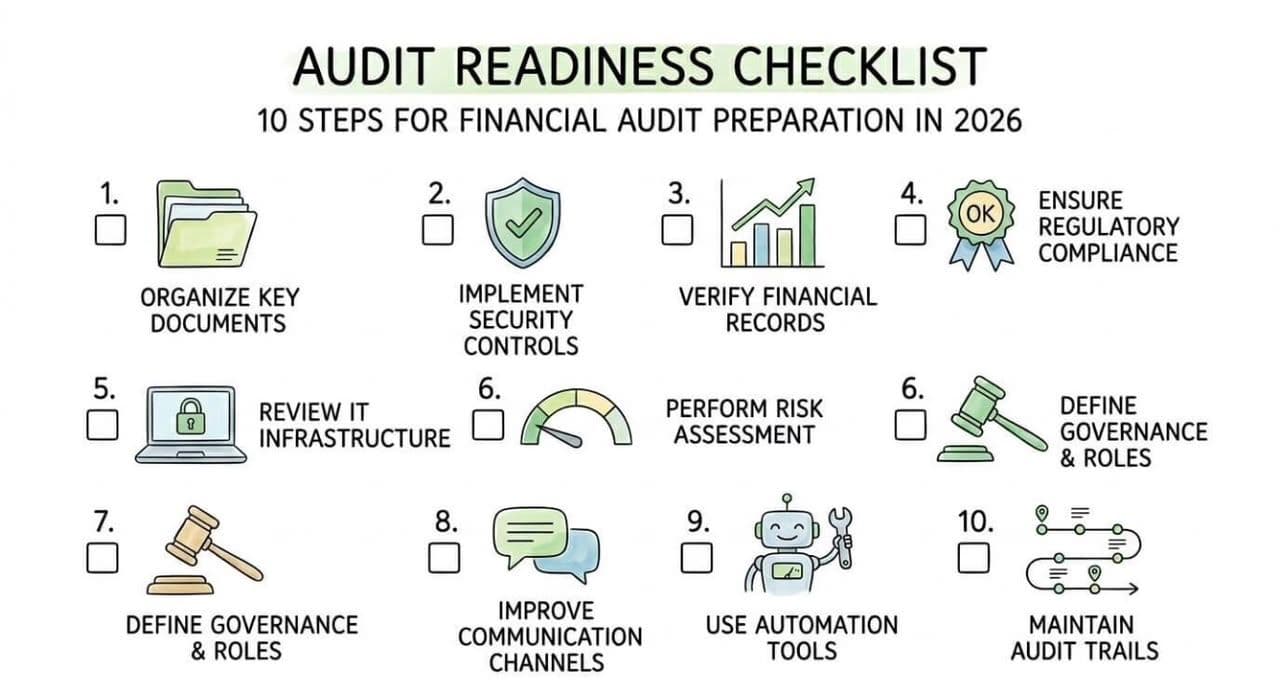
Before appointing a UK accounting provider, the overseas parent should prepare enough information for the proposed work to be assessed properly.
Seven Oak Prestige — UK Subsidiary Accounting Readiness Checklist
- ☐ Corporate structure: Parent jurisdiction, ownership chain and relevant group companies.
- ☐ Business activities: What the UK subsidiary sells, provides, imports or operates.
- ☐ Forecast annual turnover: Expected UK subsidiary revenue for the first 12 months.
- ☐ Forecast monthly transactions: Approximate invoices, bills, receipts and payments each month.
- ☐ Banking and currencies: Expected accounts, payment platforms and currencies.
- ☐ VAT and payroll: UK taxable supplies, imports, employees and payroll requirements.
- ☐ Intercompany activity: Loans, management fees, shared expenses, stock or intellectual-property arrangements.
- ☐ Existing finance arrangements: Parent finance team, accounting software and current advisers.
Two essential figures for scoping ongoing accounting work are forecast annual turnover and forecast monthly transaction volume.
But those figures alone are insufficient where the subsidiary has imports, inventory, multiple currencies, payroll, VAT obligations or material intercompany activity.
A realistic quotation should reflect the actual workload, quality of records, filing responsibilities and professional expertise required.
For a general explanation of when external accounting support becomes valuable, see our guide to accounting for non-resident-owned UK companies.
13. How Seven Oak Prestige Supports Overseas Companies
Seven Oak Prestige Ltd supports international founders and overseas businesses with UK company establishment, statutory-address arrangements, Companies House administration and compliance preparation.
For foreign-owned UK subsidiaries, our support can include:
UK subsidiary establishment
Corporate formation and documentation coordination for overseas parent companies.
Registered Office and Director Service Address
Suitable statutory-address arrangements and related administration.
Companies House compliance
Corporate administration, filing coordination and applicable identity-verification assistance.
Accounting coordination
Bookkeeping and statutory-accounts arrangements with appropriate accounting professionals.
Corporation Tax support
Company Tax Return and related tax-compliance services through professional partners, subject to agreed scope.
VAT and payroll coordination
Assessment and coordination of relevant services where required.
Banking and operational readiness
Preparation of appropriate corporate and business documentation to support provider applications, subject to independent eligibility and approval.
Specialist international tax advice, transfer pricing, complex group accounting and foreign-jurisdiction matters may require separately scoped professional services.
We begin by understanding the subsidiary’s business activities, expected turnover, transaction volume, group structure and reporting requirements.
This allows the work to be assessed appropriately rather than treating every overseas-owned company as an identical accounting engagement.
Planning Your UK Subsidiary’s Accounting and Compliance?
If your overseas company already owns a UK subsidiary, or is preparing to establish one, Seven Oak Prestige can review the initial requirements and confirm the appropriate next stage.
Discuss Your UK Subsidiary Accounting Requirements
Tell us about the overseas parent, the UK subsidiary’s activities, forecast annual turnover, approximate monthly transactions and existing accounting arrangements.
Frequently Asked Questions
Does a UK subsidiary owned by a US company need its own accounts?
Generally, yes. The UK subsidiary has its own applicable statutory accounting obligations, even where the US parent prepares consolidated financial statements.
Can a German or French parent manage the UK subsidiary’s bookkeeping?
Yes. An overseas finance team may handle bookkeeping, provided the UK company’s records are properly maintained and its statutory and tax obligations are met.
Does every UK subsidiary pay 25% Corporation Tax?
No. The applicable rate depends on taxable profits and relevant eligibility rules. The 19% small-profits rate and Marginal Relief may apply, although associated-company rules can reduce the thresholds.
Can a UK subsidiary pay management fees to its overseas parent?
Yes, potentially, where there is an appropriate commercial arrangement. The accounting treatment, tax deductibility, supporting evidence and relevant transfer-pricing rules must be considered.
Is VAT registration compulsory for every foreign-owned UK subsidiary?
No. Overseas ownership alone does not determine the requirement. The company’s activities, UK taxable supplies and VAT establishment position are important.
Does a UK subsidiary legally need a UK accountant?
There is no universal requirement to appoint a UK accountant solely because the company is foreign-owned. The directors must nevertheless ensure that the company’s obligations are met. Specialist professional support may be appropriate.
Can the UK subsidiary use the parent’s accounting software?
Potentially, yes. The system must support appropriate subsidiary-level records and the relevant UK accounting and tax requirements.
Does the overseas parent’s accountant automatically handle UK tax?
No. The parent company’s accounting engagement does not automatically extend to the UK subsidiary. Responsibility for UK work must be expressly agreed.
Can the UK subsidiary use a different financial year-end from its parent?
Yes, subject to the applicable requirements. Different reporting dates may, however, increase reconciliation and consolidation work.
Who is responsible if an external accountant misses a filing?
The company’s directors retain statutory responsibilities even when preparation and filing work is delegated. Depending on the circumstances, there may also be contractual or professional responsibility issues for the appointed provider.
Conclusion
A UK subsidiary creates a separate set of accounting, tax and compliance responsibilities within an international group.
The challenge is not simply preparing annual accounts. It is ensuring that UK statutory reporting, HMRC obligations, intercompany transactions and overseas group reporting work together.
The most effective time to establish those arrangements is before substantial trading begins.
Clear responsibilities, reliable records and appropriately scoped professional support help the UK operation become a manageable part of the wider business.
About the Author
Isaac Jackson
Founder & Managing Director — Seven Oak Prestige Ltd
Isaac Jackson supports international founders and overseas businesses with UK company establishment, Companies House processes, statutory-address arrangements, compliance preparation and banking readiness.
His work focuses on the practical requirements of establishing and maintaining UK companies from overseas.
Editorial Methodology
Last reviewed: 9 October 2026
This guide was prepared with reference to Companies House and HMRC guidance on statutory accounts, Corporation Tax, VAT, payroll, accounting records and company compliance.
It distinguishes general statutory requirements from matters requiring assessment of the particular group’s structure, business activities, transactions and jurisdictions.
Important Notice
This article provides general information and does not constitute personalised legal, tax, accounting, employment or regulatory advice.
The appropriate treatment depends on the company’s activities, group structure, relevant jurisdictions and circumstances. Specialist professional advice should be obtained where necessary.